

Last reviewed: May 6, 2026 by Mohammad "Mo" Abuershaid, Esq., Principal Attorney
Hit by an Uninsured Driver in Orange County?
Roughly 1 in 6 California drivers is uninsured. If the at-fault driver had no insurance, fled the scene, or did not have enough coverage, you can still recover, but how depends on whether you carried insurance yourself.
ALL Trial Lawyers handles uninsured motorist (UM) and underinsured motorist (UIM) claims throughout Orange County. Principal attorney Mo Abuershaid leads every case. We do not get paid unless you do.
Which Situation Are You In?
Two very different sets of California rules apply depending on whether you were the insured driver or the uninsured driver. Pick the scenario that matches yours.
The other driver was uninsured
You were insured. The driver who hit you had no coverage, was underinsured, or fled the scene. Your own UM or UIM coverage almost certainly applies.
I was the one without insurance
You were driving without valid insurance when you were hit. California Proposition 213 limits your recovery, but you may still have a case for medical bills and lost wages.
Notice deadlines are shorter than you think. Many California auto policies require you to notify the carrier of a UM claim within 30 days, give written notice of an underinsured claim within a specific period after settling with the at-fault driver, or file an arbitration demand within two years. Missing a notice deadline can void your coverage even when the underlying claim is strong. Call 866-811-4255 before you talk to your carrier.
How Common Is This in Orange County?
Uninsured driver crashes are not a rare exception. They are a structural feature of California's roads.
Sources: Insurance Research Council uninsured motorist study; California SWITRS / OTS most recent reporting year. Many "insured" California drivers carry only the state minimum, leaving them effectively underinsured for serious injury claims.
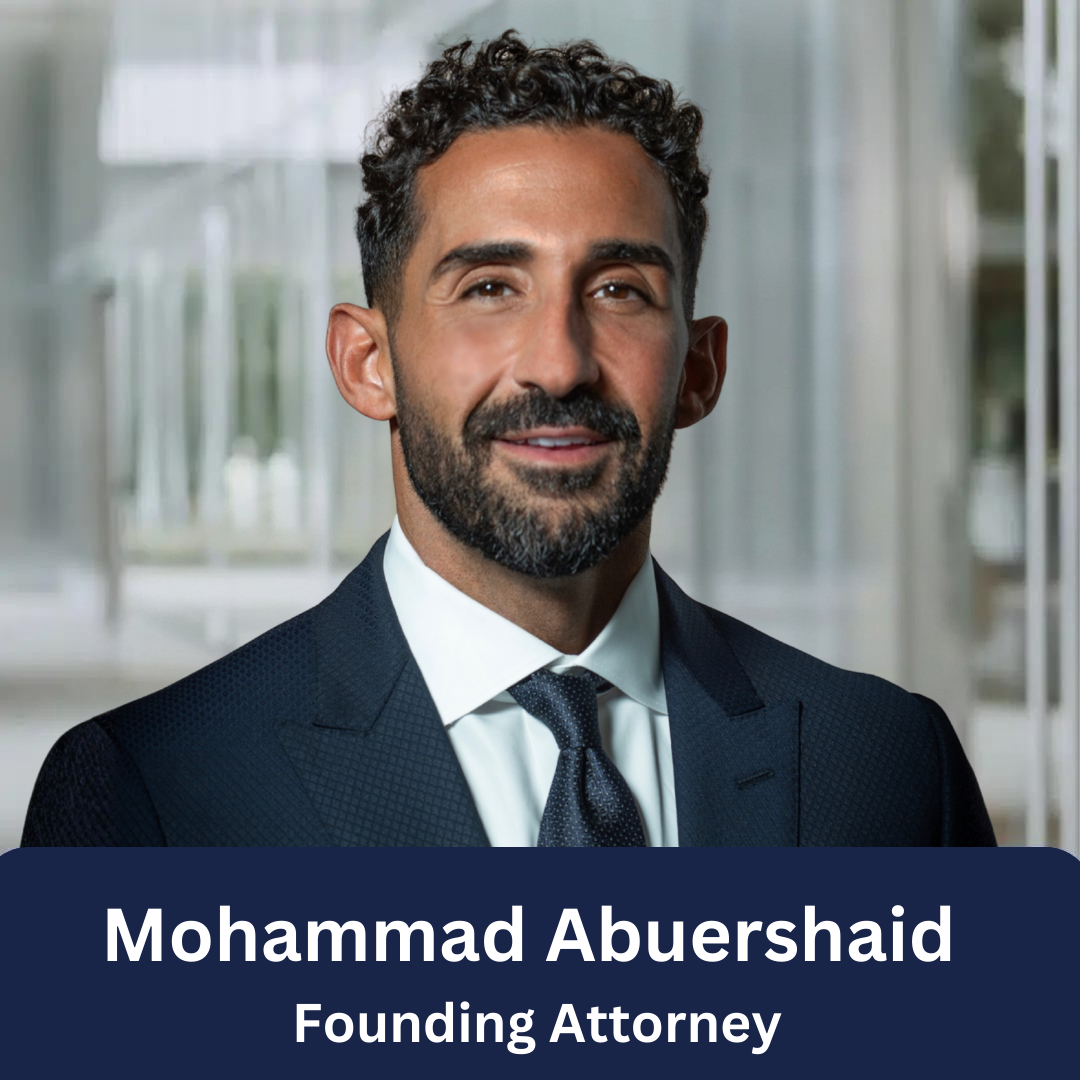
Mohammad "Mo" Abuershaid
Principal Attorney, ALL Trial Lawyers
- Principal attorney on every case the firm signs; every associate works under his supervision
- Former Orange County Public Defender, with extensive trial experience that translates directly to insurance defense litigation
- Super Lawyers honoree, 2020 to 2026 (seven consecutive years)
- Featured in CNN, the New York Times, and the Los Angeles Times
- Headquartered in the City of Orange, with offices throughout Orange County
When the Other Driver Has No Insurance
The at-fault driver having no insurance is not the end of your case. In most situations it is the start of a different kind of claim, made against your own auto policy under California's mandatory uninsured motorist (UM) and underinsured motorist (UIM) coverage rules.
What is uninsured motorist (UM) coverage?
Uninsured motorist coverage is a layer of bodily injury protection that pays you when the at-fault driver has no liability insurance, has insurance the carrier denies coverage on, or cannot be identified (a hit and run). California Insurance Code §11580.2 requires every auto liability policy issued in California to include UM coverage at limits at least equal to the policy's bodily injury limits, unless the named insured rejected UM coverage in writing.
If you never signed a written UM rejection, you have UM coverage. Even drivers who think they "don't have it" usually do.
What is underinsured motorist (UIM) coverage?
Underinsured motorist coverage applies when the at-fault driver does have insurance, but not enough. California's minimum bodily injury coverage is now $30,000 per person and $60,000 per accident as of 2025. Serious injury cases routinely exceed those limits. UIM coverage steps in to make up the difference, up to your own policy's UIM limits.
Important California rule: UIM coverage is offset, not stacked. If the at-fault driver had a $30,000 policy and you have $100,000 in UIM coverage, you can recover up to $70,000 from your UIM policy, not $100,000 on top.
Hit and run crashes
If the driver who hit you fled the scene and was never identified, the case is treated as an uninsured motorist claim under your own policy. To trigger UM coverage in a hit and run with no physical contact (a "phantom vehicle" case where another driver caused the crash but did not touch you), California requires independent corroboration of the other vehicle's involvement, such as an eyewitness or video evidence. Cases with physical contact are easier to prove, but the carrier will still investigate aggressively.
How Each Coverage Type Applies
| Situation | Coverage that applies | Source of payment |
|---|---|---|
| Other driver had no insurance | Uninsured Motorist Bodily Injury (UMBI) | Your own auto policy |
| Hit and run, driver not identified | UM (with corroboration if no contact) | Your own auto policy |
| Other driver had minimum coverage, your damages exceed it | Underinsured Motorist (UIM), offset against the at-fault policy | Your own auto policy after at-fault carrier pays |
| Other driver insured but carrier denies coverage | UM coverage typically applies | Your own auto policy |
| Other driver was a rideshare driver in active ride | Rideshare company's $1M policy | Uber or Lyft commercial policy |
| Property damage only, no injuries | Uninsured Motorist Property Damage (UMPD), $3,500 limit in CA | Your own auto policy if you have UMPD |
Why your own carrier is not your friend in a UM case
Many drivers assume their own insurance company will treat a UM claim the same way it treats a routine collision claim. It does not. In a UM claim, your carrier is functionally standing in the shoes of the at-fault driver, which means it has every financial incentive to minimize what it pays you. The same adjuster who was friendly when you bought the policy now works to reduce the value of your claim.
Common UM claim tactics carriers use:
- Demanding a recorded statement before you have an attorney
- Requesting a blanket medical authorization to dig through your entire history
- Arguing your injuries are pre-existing
- Disputing whether you were actually hit by an uninsured driver
- Claiming policy notice deadlines were missed
- Lowballing the initial offer at a fraction of medical specials
Treat a UM claim as adversarial from day one. The friendliness ends the moment you ask for money.
California Proposition 213 Explained
Proposition 213 is a 1996 California ballot initiative now codified in Civil Code §3333.4. It was sold to voters as a way to discourage uninsured driving. In practice, it sharply limits what an uninsured driver can recover after a crash, even when the other driver was entirely at fault.
What Prop 213 takes away
If you were driving without valid auto liability insurance at the time of the crash, you cannot recover non-economic damages: pain and suffering, emotional distress, loss of enjoyment of life, or loss of consortium. This is true even if the other driver was 100 percent at fault, drunk, on their phone, or fled the scene.
What you can still recover: medical bills, lost wages, property damage, and other measurable economic losses. In a serious injury case, those numbers can still be substantial.
When Prop 213 applies
Prop 213 applies if all three of the following are true:
- You were the owner or operator of the vehicle
- You did not have valid auto liability insurance at the time of the crash
- The vehicle was being operated on a public road in California
Important exceptions to Prop 213
The law has carve-outs that many uninsured drivers do not realize exist. Prop 213 does not apply if:
You were a passenger
Prop 213 only applies to the owner or operator of the uninsured vehicle. If you were a passenger, even in an uninsured car, the rule does not limit your recovery against the at-fault driver.
The other driver was convicted of DUI
If the at-fault driver was convicted of DUI in connection with the crash, Civil Code §3333.4(c) restores your right to recover non-economic damages even if you were uninsured.
You were on private property
Prop 213 applies to crashes on public roads. Crashes in private parking lots, driveways, and other non-public areas are not covered by the rule.
You were operating an employer's vehicle
If you were driving a company vehicle in the course of employment, the employer's coverage usually controls and Prop 213 does not strip your non-economic damages.
The accident was caused by intentional conduct
Some courts have held that Prop 213 does not apply when the at-fault driver acted intentionally rather than negligently, such as in a road rage assault.
Your insurance lapsed for non-payment within a grace period
Specific facts matter. If a recent payment, reinstatement, or grace period was in effect on the date of the crash, you may have been "insured" for purposes of the statute even if the carrier was on the verge of canceling.
What Prop 213 does NOT take away
Even when Prop 213 applies, you can still recover the following:
- Medical bills, both past and reasonably future, for ER care, hospitalization, surgery, imaging, physical therapy, and prescriptions
- Lost wages, both past and future earning capacity
- Property damage, including vehicle repair or replacement and diminished value
- Out-of-pocket expenses, including transportation, durable medical equipment, and household services
In a serious injury case where treatment costs $80,000 and the victim missed eight months of work, the recoverable economic damages alone can easily exceed six figures. Prop 213 hurts but it does not eliminate the case.
Why insurance companies love Prop 213
Insurance carriers raise Prop 213 in almost every case where there is any question about coverage status, even when the rule does not actually apply. The rule is so favorable to the defense that carriers will delay, demand documentation, and contest coverage status to put pressure on the claim. An attorney who knows the exceptions and can prove valid coverage on the date of the crash is essential.
What to Do After an Uninsured Driver Crash
The first 48 hours matter. Follow this sequence whether you were insured or not.
- Call 911 and document the scene. A police report is essential, especially if the other driver was uninsured or fled. Photograph everything: vehicles, road, injuries, the other driver's license and insurance card if available.
- Get medical care immediately. Same day, ideally. Adjusters use treatment gaps to argue you were not really hurt. ER, urgent care, or your primary care physician.
- Get your own insurance documentation in order. Your declarations page, proof of premium payments, and any communications with your carrier around the date of the crash. This matters for both UM claims and Prop 213 defense.
- Notify your own carrier briefly. Just the basic facts. Do not give a recorded statement. Do not sign a medical authorization. Tell them you will follow up after speaking with an attorney.
- Do not talk to anyone else's insurer. Even if the other driver was uninsured, you may still get calls from rental car companies, hospital lien holders, or third parties. Refer them to your attorney.
- Call ALL Trial Lawyers. We can determine within minutes whether UM coverage applies, whether Prop 213 is a real concern, and what the case is realistically worth. Free consultation, 24 hours a day, 866-811-4255.
Why Orange County Drivers Choose ALL Trial Lawyers for UM Claims
UM cases are arbitrated, not always tried
Most California UM disputes are resolved in arbitration, not jury trial, under the terms of the policy. Arbitration is a different procedural environment, with different evidentiary rules and different strategic decisions. We have handled California UM arbitrations and know what each major carrier (Mercury, AAA SoCal, State Farm, Geico, Progressive, Wawanesa) tends to fight on and where they tend to fold.
We know the Prop 213 exceptions
The default insurance defense playbook treats Prop 213 as a complete bar. It often is not. Identifying the right exception, proving valid coverage on the date of the crash, or demonstrating that the at-fault driver was DUI-convicted can restore the full value of the case.
Mo on every case
Whether your claim is a UM arbitration or a Prop 213 dispute, Mo personally supervises the file. You will not be handed off to an associate you cannot reach.
Contingency fee, no upfront cost
You pay nothing unless we recover. The investigation, expert costs, and arbitration filing fees are advanced by the firm. If we do not recover, you owe nothing.
Frequently Asked Questions
Can I sue an uninsured driver personally in California?
Yes, but in practice it rarely produces meaningful recovery. Drivers who carry no insurance usually have no significant assets to collect from, and a judgment against an empty defendant is just paper. The realistic path to compensation is your own uninsured motorist (UM) coverage. If the uninsured driver does have assets, both paths can be pursued in parallel.
Will my own insurance rates go up if I file a UM claim?
Under California Insurance Code §491, an insurer cannot raise your rates or cancel your policy because you filed a UM claim where you were not at fault. If your carrier tries to penalize you for filing a legitimate UM claim, that itself may be actionable.
How do I prove I had insurance at the time of the crash for Prop 213?
The most useful documentation is your declarations page showing the policy was active on the date of the crash, plus proof of premium payments around that date (bank statements, autopay records, or carrier confirmations). If the policy lapsed and was reinstated, the dates of lapse and reinstatement become critical. We help clients gather and present this documentation in a way that satisfies the carrier or, if needed, the court.
What happens if I had insurance but my passenger did not?
Prop 213 only applies to the owner or operator of the vehicle. A passenger's insurance status is irrelevant. Passengers can recover full economic and non-economic damages regardless of whether they personally carried auto coverage.
Does UM coverage apply if I was a pedestrian or bicyclist?
Yes, in most cases. California UM coverage typically follows the insured person, not just the insured vehicle. If you have UM coverage on your auto policy and you are hit by an uninsured driver while walking or biking, your UM coverage usually applies. The exact wording of your policy controls.
How long do I have to file a UM claim in California?
The personal injury statute of limitations is two years. However, your auto policy typically requires earlier notice and may require you to formally demand arbitration within two years of the crash to preserve UM benefits. Some policies require notice within 30 days. Review your policy or have an attorney do it immediately.
Can I recover both from the at-fault driver and from my own UIM coverage?
Yes, but not double. UIM is offset against what you collect from the at-fault driver. If the at-fault driver had a $30,000 policy and you have $100,000 in UIM, you recover up to $30,000 from the at-fault driver and up to $70,000 from your UIM (the $100,000 limit minus the $30,000 already collected).
Does Prop 213 apply if my policy expired the day before the accident?
Maybe. The specific facts matter. If your policy expired but you were within a statutory or contractual grace period, paid the premium during a reinstatement window, or had ongoing coverage by automatic renewal, you may still have been "insured" for purposes of the statute. We have successfully argued coverage in cases where the carrier initially asserted Prop 213 applied.
What if the at-fault driver was DUI but I was uninsured?
Civil Code §3333.4(c) restores your right to recover non-economic damages if the at-fault driver was convicted of DUI in connection with the crash. The conviction has to be tied to the same incident. This exception alone can transform a Prop 213 case worth $20,000 in medicals into a six-figure case with full pain and suffering recovery.
How long does a UM or UIM case take?
UM claims often resolve faster than third-party claims because there is only one carrier and one set of policy limits. Many resolve within six to twelve months. Cases that go to arbitration can take longer, twelve to twenty-four months. Cases involving Prop 213 disputes can take longer still because coverage status has to be litigated separately from damages.
What is "stacking" and is it allowed in California?
Stacking refers to combining UM/UIM limits across multiple vehicles or policies. California generally does not allow inter-policy stacking, meaning you cannot add the UM limits from your spouse's policy onto your own. Intra-policy stacking (multiple vehicles on the same policy) is also limited. The exact rules turn on the policy language and the relationships between the insureds.
What does it cost to hire ALL Trial Lawyers for an uninsured driver case?
Nothing upfront. We work on a contingency fee, which means we are paid a percentage of the recovery only if we win. If we recover nothing, you owe nothing. The percentage and any case costs are spelled out in the retainer agreement before you sign.
Related Practice Pages
Orange County Car Accident Lawyer
The main hub for OC car accident cases, including freeway crashes, intersection collisions, and rear-end claims.
Rideshare Accident Lawyer
Uber and Lyft cases involve a different coverage analysis: Period 1, 2, or 3 determines which policy applies.
Comparative Fault in California
What happens when both drivers share fault under California's pure comparative negligence rule.
Free Case Review for Your Uninsured Driver Claim
We can tell you in one call whether UM coverage applies, whether Prop 213 is a real issue, and what your case is realistically worth.
No upfront cost. No fee unless we win.
Request Free Case Review